

Want one person to walk you through this? Book a short call and we will tell you the next step, or meet our Cape Coral real estate agents.
Most buyers who reach out about Cape Coral fall into two buckets. Either they’ve watched 40 YouTube videos with a spreadsheet of canal listings but no idea what comes first. Or they’ve done zero research, are flying down next weekend, and want to “just look at houses” without ever saying “pre-approval” out loud. Both end at the same line: there’s a real process for buying a home in Florida, it has a fixed order, and skipping steps creates the closing-table surprises you read about in horror stories.
I’m Brayden Milner, third-generation Realtor with Florida Future Realty, born and raised in Cape Coral. Real estate isn’t a career I chose out of a catalog. It’s the water I grew up swimming in. Grandparents started selling here in 1994, mom Susan since the early 2000s. I’ve walked buyers through every version of this: a first offer written with a $5K EMD and shaking hands, a cash purchase sight unseen from New Jersey, a contract signed after one February visit. Order’s the same. The Cape Coral details change.
This is the full walk-through I give every buyer. Pre-approval, criteria, search, offer, inspection, financing, title, closing, then the after-closing stuff nobody warns you about. Think of it as the buyer-side version of the 3 P’s (price, presentation, promotion) we use for sellers: a fixed framework, applied with local detail. Flood zones, UEP, seawalls, insurance binder as the longest path. By the end, you guys will know exactly what step you’re on and what comes next.
Step 1: Pre-Approval First (Don’t Shop Without It)
Pre-approval first. That’s the rule. If you guys take nothing else from this article, take that one line. You do not start a Cape Coral home search by browsing Zillow. You start with a mortgage lender, hand over your last two years of tax returns, two months of bank statements, pay stubs, and driver’s license, and let them pull credit. The output is a written pre-approval letter that says “this buyer can borrow up to $X at roughly Y% interest with Z down.” Without that letter, you’re window shopping.
A pre-qualification is a soft conversation: lender takes your word, gives you a ballpark. A pre-approval is real underwriting: credit pulled, documents verified, written letter you can submit with an offer. Most Cape Coral listing agents won’t take an offer seriously without one. The CFPB covers the documentation in detail at consumerfinance.gov.
The Loan Programs You’ll See in Cape Coral
You guys are going to hear four main loan types in this market. Here’s what each one actually means:
- Conventional. Default for most buyers. 3% down for first-timers or 5% otherwise. PMI required under 20% down, drops off with equity. Best for solid credit (680+) and stable income.
- FHA. Government-backed, 3.5% down, more forgiving credit (580+). MIP for the life of the loan in most cases. Trade-off is easier qualification.
- VA. Active-duty, veterans, qualifying surviving spouses. Zero down, no PMI, competitive rates. If eligible, almost always the best option.
- USDA. Zero down, rural-development, income-restricted. Most of Cape Coral itself is classified metro and doesn’t qualify, but parts of outlying SWFL do. Worth asking.
I’ve got a separate piece coming on what 5% down actually looks like in this market at 5% down in Cape Coral, and the full mortgage walk-through at the Cape Coral mortgage process guide. Both go deeper than I can in a single section here.
What the Lender Actually Looks At
Two ratios drive underwriting. DTI (debt-to-income) = total monthly debt (mortgage, tax, insurance, HOA) divided by gross monthly income. Most conventional programs want DTI under 43%, flex up to 50% on strong files. Reserves = liquid money left after down payment and closing costs. Most programs want 2-6 months of payments for a primary, more for second homes and investments.
The number that surprises out-of-state buyers is how heavily insurance and taxes weight DTI. A $400K home in Florida isn’t a $400K payment. Homeowners ~$3,000-$4,500/yr ($2,500 is a best case for newer construction with full wind-mitigation credits), flood anywhere from $500-$1,200 in X zones to $800-$2,500 in AE (older ground-level AE homes can run $3K-$7K), tax roughly 0.8-1.4% of purchase price after reassessment depending on homestead status: carrying cost on top of P&I runs $800-$1,200/mo before the lights come on. Don’t be shocked if the Cape Coral pre-approval number comes in lower than the same income would buy in Ohio. Cost of paradise, and the lender’s just doing math.
Where a lot of out-of-state buyers go wrong is calling their hometown bank, which often has no feel for Florida flood, wind, and condo financing. We keep a short bench of local Cape Coral and SWFL lenders we trust, and we match you to the one that fits your file, first-time buyer, self-employed, jumbo, or a tougher condo loan. That introduction is part of working with us; ask and we’ll point you to the right person before you waste a week with the wrong one.
Step 2: Build the Search Criteria (Before You Open a Single Listing)
Once you’ve got the pre-approval letter in hand, the next step is to actually decide what you guys are shopping for. The buyers who do best in Cape Coral are the ones who sit down for a real conversation about criteria first, because Cape Coral has more variety hiding inside the same city than most markets in the country. Four big criteria buckets drive every Cape Coral search:
Quadrant Choice
Cape Coral has four informal quadrants and they’re not interchangeable. Southeast is oldest and closest to the bridges off the Cape. Southwest holds most of the newer high-end inventory: Cape Harbour, Tarpon Point, SW direct-access canals. Northeast is the affordability tier, newer construction and freshwater canals, parts still on well/septic. Northwest is the growth frontier: new builds and UEP exposure. The right quadrant depends on lifestyle, budget, and water type. Full breakdown in our quadrant-by-quadrant neighborhoods guide.
Canal Tier (If You’re Going Waterfront)
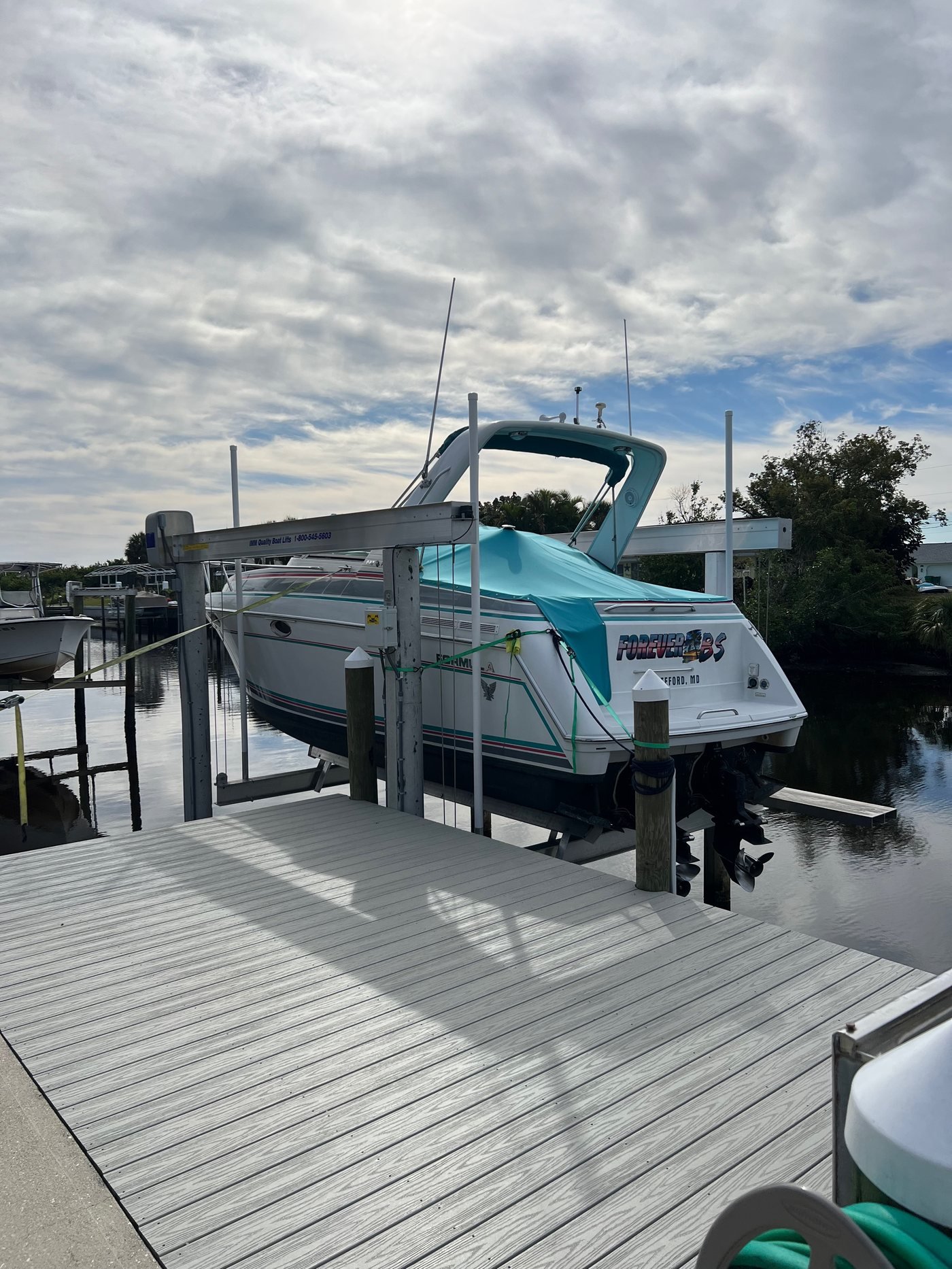
If you’re shopping waterfront, the most important question is which canal tier. Direct Gulf access = no locks between your dock and the river (bridges may still limit vertical clearance). Sailboat access means no bridges and no locks. Indirect = bridges or a lock in your path. Freshwater is landlocked. The price gap between tiers on comparable homes can run $200K+, and the lifestyle gap is enormous. Anyone planning to keep a real boat at the dock needs the full Cape Coral canal system guide before starting a waterfront search. The seawall is part of the house. Don’t forget that line.
Build Era and Construction Type
A 1972 ground-level concrete-block home with original windows and a 2008 roof is a completely different product from a 2022 build with current-code elevation, impact windows, and a hip roof, even if priced the same. Carriers know it, lenders know it, resale knows it. Newer construction means lower insurance, easier carrier placement, less deferred-maintenance risk. Older is often cheaper per square foot but comes with a longer punch list. Full breakdown in our Cape Coral housing stock guide.
Budget Realism (Insurance and Taxes, Not Just the Mortgage)
Buyers who only budget for the mortgage end up house-poor by month three. Real monthly cost is principal, interest, tax, homeowners, flood, and sometimes a UEP payment. On a $450K home in moderate flood zone with paid-off UEP: $3,500-$4,200/yr taxes, $3,000-$4,500 homeowners, $500-$1,200 flood. Roughly $600-$850/mo on top of the mortgage, before power or pool service. See our property taxes guide and insurance landscape.
Step 3: The Search
With pre-approval done and criteria built, the actual search starts. You can see the live list of homes for sale in Cape Coral on our search page. Most of you guys are going to be doing this from out of state, at least for the first round.
Your agent sets you up on a saved MLS search that auto-emails new listings the moment they hit. Zillow and Realtor.com lag (hours or days), and they’re cluttered with stale data and Zestimates that miss Cape Coral’s flood-zone and canal-tier variation. The MLS feed from your agent is the cleanest, fastest source. Use it.
For out-of-state buyers, the modern search uses three layers of remote diligence before anyone books a flight. Virtual tours eliminate 80% of listings from your kitchen. Live FaceTime walks a finalist room by room in real time. Aerial and satellite tools confirm canal type, neighbors, road noise, and amenity proximity. By the time you fly down, you should be touring 3-6 finalists, not browsing 20 random houses. That’s buying with intent vs. buying on vibes.
Step 4: Writing the Offer
When you guys find the house, the offer goes in writing. In Florida, the standard contract is the Florida Realtors/Florida Bar Residential Contract for Sale and Purchase (“FR/Bar”). Floridarealtors.org publishes the current version. Most Cape Coral transactions use this or the buyer-favorable Florida Realtors-only contract.
The Pieces of a Strong Cape Coral Offer
A Cape Coral offer has the following moving parts. Every one of them is negotiable, and every one of them has consequences. As you guys read through, think about which ones matter most for your specific situation:
- Purchase price. In Cape Coral’s last 18 months of buyer’s market, below-list is normal. In a multi-offer on a unique waterfront, that reverses.
- Earnest money deposit (EMD). Good-faith deposit into escrow at mutual execution. Typical 1% to 3% of price. Full mechanics at earnest money and escrow in Florida.
- Financing contingency. Protects EMD if your loan falls through. Negotiate the period long enough to clear underwriting.
- Inspection contingency. 7 to 15 days to inspect and either negotiate repairs/credits or walk with EMD intact. Most important contingency in the contract. Don’t shorten to win a bid unless you really know what you’re doing.
- Appraisal contingency. If financing, the lender’s appraiser must value the home at or above price. Low appraisal = leverage to renegotiate or walk.
- Insurance contingency. Florida-specific and critical. You must bind insurance before closing. Post-Ian, this is not a formality.
- HOA / condo doc review. Cape Coral single-family is overwhelmingly no-HOA, but condos and some newer subdivisions have HOAs with rules and special-assessment exposure.
- Closing date. 30 to 45 days financed, 14 to 21 days cash. Driven by lender timeline.
- Seller concessions. Credits toward closing costs, rate buydowns, or repairs. The phrase you’ll hear right now is “marry the house, date the rate,” which usually means a seller credit you apply to buy down rate for the first 2-3 years.
How we write the offer depends on the listing, not a formula. A home that’s been sitting 60-plus days gives us room to come in under list and ask for credits; a fresh, well-priced listing in a strong quadrant gets a cleaner, more competitive offer because lowballing it just hands it to someone else. On unique waterfront where comps are thin, we lean on condition, days on market, and how motivated the seller actually is rather than a percentage. We’ll walk you through the trade-off between a price reduction and a seller credit in plain terms and build the offer around your timeline and how the property is priced, that strategy conversation is exactly what we’re for.
Step 5: The Inspection Period (Where the Real Due Diligence Happens)
Once the contract goes “mutually executed,” the inspection clock starts. Typically 7 to 15 days, and it’s the most important window of the entire transaction. Everything here decides whether you close with a clear picture or discover the seawall is failing six months after move-in.
Cape Coral has more diligence checkpoints than the average market because of waterfront, older housing stock, flood-zone reality, and the insurance environment. The full menu I walk you guys through, with current market price ranges:
- General home inspection ($350-$600). Top-to-bottom: roof, HVAC, electrical, plumbing, structure, appliances, attic. Non-negotiable.
- 4-point ($100-$200). Required by most carriers on homes 20+ years old before they’ll bind. Roof, HVAC, electrical, plumbing condition. Often bundled with general inspection.
- Wind mitigation ($75-$150). Documents hurricane-resistant features: roof-to-wall attachments, deck type, shape, opening protection. Credits reduce your wind premium 20% to 45%. Every buyer commissions one. Pays for itself the first year.
- Roof ($150-$350). Sometimes folded into general, often standalone for older roofs. Carriers underwrite roof condition aggressively. Pre-2017 roofs need a real inspection and remaining-life estimate before you write the offer.
- Seawall, waterfront only ($500-$800). Highest-leverage inspection on any Cape Coral waterfront. Replacement runs $64K-$120K on a standard lot; a failing wall is structural, not cosmetic. Skipping this on a canal home is a six-figure gamble. Full breakdown in the canal system guide.
- Pool ($150-$250). Separate vendor in most cases. Pump, motor, heater, plumbing, surface, screen enclosure. A tired pool runs $5K-$25K to bring current.
- WDO/termite ($75-$150). Often required by lender. Florida termite pressure is real.
- Survey ($350-$500). Boundaries, easements, encroachments, structure footprint. Required by most title policies. Critical on canal lots for seawall placement and dock encroachment.
- Elevation certificate, AE zones ($500-$800). Documents finished floor relative to FEMA base flood elevation. Can dramatically lower flood premiums and supports any LOMA filing. See our flood zones guide.
- Mold, only if indicated. Visible staining, recent water intrusion, or musty smell.
- Septic ($300-$500). NE/NW Cape on septic. Tank, drain field, pumping records. Replacement runs five figures.
- Well ($150-$300, plus $100-$200 water testing). NE/NW Cape on well water. Pump, pressure tank, water quality, treatment equipment.
Most buyers won’t need every one. A new-construction inland home might only need general, 4-point, wind mit, and survey. A 1978 direct Gulf-access home in the southeast needs the full menu plus the seawall. The mix depends on the property.
We don’t send you off to find inspectors on your own. We keep a vetted list of local pros, general home inspectors, a seawall/marine inspector for waterfront, a 4-point and wind-mit team, pool specialists, and surveyors who know Cape Coral lots, and we line up the right combination for the specific house you’re buying. Knowing which local gotchas to check for in advance is half the value; we flag them before you spend money on the wrong inspection.
What You Do With the Inspection Reports
Once reports come back, three options: accept as-is, request repairs or credits, or terminate within the inspection period and get EMD back. Most Cape Coral inspection periods end with a repair or credit negotiation. Goal is to address material issues (roof, seawall, HVAC, electrical, structural, plumbing) and not get bogged down on cosmetic punch-list items.
Step 6: Financing Finalization
While inspections are happening, your lender is moving through the financing finalization track in parallel (the full loan walk-through is in our Cape Coral mortgage process guide). Three big things happen here that you guys need to track:
- Appraisal ordered. Lender sends a Florida appraiser; value must support LTV. Low appraisal = leverage to renegotiate.
- Underwriting. Underwriter reviews the full file (income, assets, debts, credit, property) and issues clear-to-close, conditional approval, or denial. Most files clear with conditions and then get final approval.
- Insurance binder. The Cape Coral-specific one that breaks closings if you don’t manage it. Must be quoted, accepted, and bound before closing. Post-Ian, getting a binder on certain properties (older roofs, AE zone, certain construction types) takes longer than underwriting. Start shopping insurance the day the contract goes mutual, not two weeks before closing. The binder has become the single longest path in most Cape Coral closings. Full breakdown in our insurance landscape guide.
Step 7: Title Work
In Florida, residential closings are almost always handled by a title company, not an attorney. The title company runs a public records search, flags liens/judgments/encumbrances, and issues a title commitment listing what needs to be cleared before closing.
The commitment drives two things: the seller’s obligation to clear issues, and the issuance of owner’s title insurance (one-time policy protecting buyer against undiscovered defects). Owner’s title in Florida runs a state-regulated rate of $5.75 per $1,000 on the first $100K and $5.00 per $1,000 above that. On a $400K home, that’s roughly $2,075. Here is the part that works in your favor as a buyer: in Lee County and most of Southwest Florida, the seller customarily pays for the owner’s title policy that protects you, one of the quiet closing-cost advantages of buying here. Lender’s title is a separate, smaller policy the buyer pays for, required by the mortgage lender.
Title companies in Cape Coral also handle the closing itself in most cases. Full breakdown of which costs buyer pays vs. seller is in our Cape Coral closing costs guide.
Step 8: Closing
Florida is a “closing table” state, meaning the actual transfer of funds and signing of documents happens at a scheduled closing, whether at the title company office, at a remote signing location, or via mail-away/electronic closing for out-of-state buyers. There are a few specific mechanics that every Cape Coral buyer needs to know. For the dollar side of closing day, see our Cape Coral closing costs guide:
The 3-Business-Day Closing Disclosure Rule
Federal TRID rule (enforced by CFPB) requires your final Closing Disclosure (CD) at least 3 business days before closing. CD lists every line: loan amount, rate, payment, closing costs, credits, prepaids, cash to close. Review against your original Loan Estimate. Major changes can trigger another 3-day waiting period and delay closing.
The Wire Fraud Warning (Take This Seriously)
Wire fraud is the single biggest financial threat to real estate closings in 2026. Criminals impersonate title companies, send fake wiring instructions, intercept buyer funds. Once discovered, the money is gone. Rule: never wire based on emailed instructions. Call the title company at an independently verified phone number (not from the email) and confirm wire details verbally before sending a dollar. 30 seconds of verification is the cheapest insurance you’ll ever buy.
Wet vs. Dry Closing
Florida is a “wet” closing state: funds disbursed at the table or immediately after. Deed records with Lee County same day or next business day. Closing is your move-in date in most cases.
Step 9: Post-Closing (The Stuff Nobody Warns You About)
You closed. The keys are yours. Cape Coral is hot, the pool needs cleaning, the lanai is calling. Here’s the short list of things you guys need to do in the first 30 to 90 days post-closing that most buyers miss:
File for Homestead Exemption (Critical)
If primary, file Florida homestead exemption with Lee County Property Appraiser. Deadline March 1 of the year after purchase. Reduces assessed value up to $50K. Activates the Save Our Homes cap (annual increase capped at lesser of 3% or CPI). Missing this leaves real money on the table every year. File the moment you close. Full mechanics in our property taxes guide.
Verify Your UEP Assessment Status (NE/NW Cape Especially)
If your home is in an active or planned UEP phase, confirm with the City of Cape Coral whether the assessment is paid, financed on your tax bill, or pending. North Cape 1 East has a $32,288 total per-lot assessment as a current example (based on the city’s published assessment contracts). Know what you own before the first tax bill arrives in November. City utility records at capecoral.gov.
Set Up Utilities, Services, and Your Address
LCEC (Lee County Electric Cooperative) for electric. City of Cape Coral for water/sewer if on city utilities. Trash and internet (Xfinity, CenturyLink, fiber in pockets). Pool service. Lawn ($30-$60/cut). Quarterly pest control. Then USPS, DMV (30 days to swap to a Florida license), voter registration, banks, employer, insurance, subscriptions.
Cape Coral-Specific Checks Threaded Throughout
A few items deserve repeating because they’re Cape Coral-specific and they cause more closing-table surprises than anything else in this market:
- UEP verification on NE/NW Cape. Pull the City utility status. Confirm paid, financed, or pending.
- Flood zone disclosure on every property. Pull the FEMA FIRM, request elevation certificate, get a flood quote before closing. FEMA-cited data puts a meaningful share of NFIP claims, roughly 20% to 40% depending on the reporting window, outside the mapped high-risk zones (Zone X included). Moderate risk on the map doesn’t mean no risk in practice.
- Seawall age + condition on every waterfront. The seawall is part of the house. Get the marine inspection.
- Septic vs. city sewer on NE/NW Cape. If septic, get inspection + pumping records. If city sewer, confirm connection is paid.
- Roof age on every property. Pre-2017 roof on a resale is a binding risk. Price it into the offer.
- Insurance binder day-one shopping. Most common reason Cape Coral closings get delayed.
Frequently Asked Questions
Do I need a real estate agent to buy a home in Cape Coral?
Legally no, practically almost always yes. Cape Coral has enough quirks (flood zones, UEP, seawalls, post-Ian insurance, canal tiers) that going alone exposes you to surprises experienced agents catch in their sleep. Buyer’s agent compensation is negotiated separately after the NAR settlement, you’ll sign a written buyer-broker agreement stating what you owe your agent, and the listing side may or may not contribute. Budget accordingly.
How long does it take to buy a home in Cape Coral from offer to closing?
Financed: 30 to 45 days from mutual execution to closing. Cash: 14 to 21 days if title and inspections cooperate. Longest single path right now is the insurance binder (multi-week for certain properties). Plan 45 days as the financed baseline, 60 worst case if you hit insurance friction.
How much money do I need upfront to buy in Cape Coral?
Down payment + closing costs + EMD + inspections + first-year prepaids. On a $400K conventional at 5% down: ~$20K down, $8K-$12K closing costs, $5K-$12K EMD (credited at closing), $1K-$2K inspections, several thousand prepaids. Plan 8% to 10% of price as real cash-to-close. Full breakdown in our closing costs guide and our 5% down breakdown.
What is the difference between pre-qualification and pre-approval?
Pre-qualification is a verbal estimate. No credit pull, no document verification. Useful for an early ballpark, not enough to submit with an offer. Pre-approval is real underwriting: lender pulls credit, verifies income/assets, issues a written letter confirming loan amount. Most Cape Coral listing agents only consider pre-approved offers. Always get pre-approved before shopping.
Should I waive the inspection contingency to make my offer more competitive?
Almost never. Inspection contingency is the buyer’s single most important protection. Waiving on Cape Coral waterfront, where a failing seawall is a $100K problem and a flood-zone surprise blows up your premium, is a high-stakes gamble. Full waivers are rare and only appropriate for experienced cash buyers in true multi-offer scenarios where they’ve already pre-inspected.
What happens if my insurance binder doesn’t come through before closing?
Closing gets delayed. Federally backed mortgages require proof of homeowners and flood (where applicable) before funding. Sometimes carrier-side (missing wind mit, 4-point flagged something). Sometimes property-side (roof too old, prior claims, construction type carrier won’t write). Usually solvable but takes time. Shop insurance the day the contract goes mutual, get multiple quotes in parallel, have your binder lined up at least 10 business days before closing.
What’s the homestead exemption deadline and what happens if I miss it?
Deadline is March 1 of the year after residency. Filed with the Lee County Property Appraiser. Miss it and you pay non-homesteaded taxes for one extra year (several hundred to over a thousand in lost savings depending on home value). Most buyers can submit online within weeks of closing.
The Bottom Line
Buying in Cape Coral isn’t complicated when you know the order: pre-approval, criteria, search, offer, inspect, finance, title, close, post-closing housekeeping. What makes Cape Coral different isn’t the framework. It’s the local layers welded into each step. Canal tier. Flood zone. UEP on northern lots. Seawall on waterfront. The insurance binder as the longest path. Wind mit saving 20% to 45% on premiums. Homestead by March 1.
First-time buyer: every step will be new. That’s normal. Read my own first-house experience in how I bought my first house. Out-of-state relocation: the framework is familiar but the Cape Coral specifics are not. Either way, the worst version of this transaction is the one where you wing it and discover the problems after closing.
That’s the conversation I’m built for. Whether you guys are a year out or flying down next weekend, sit down with me. No HOA, no CDD, own your land, and the right house. That’s the Cape Coral buyer outcome worth aiming for.
Reach out and let’s start the conversation about your Cape Coral purchase. Waterfront, new construction, or just figuring out which quadrant fits your budget, that conversation is 15 to 30 minutes and it sets up the whole search.