

Selling a home in Cape Coral in 2026 is a different conversation than it was in 2021. Back then, you stuck a sign in the yard on a Friday and had three offers over asking by Sunday. That market is gone. What replaced it is a real, functioning market with six to seven months of inventory and eighty-plus days on market for most segments, based on recent Lee County MLS data, and a buyer pool that has choices for the first time in years. Correctly priced homes still sell. The margin for getting it wrong has shrunk to almost nothing.
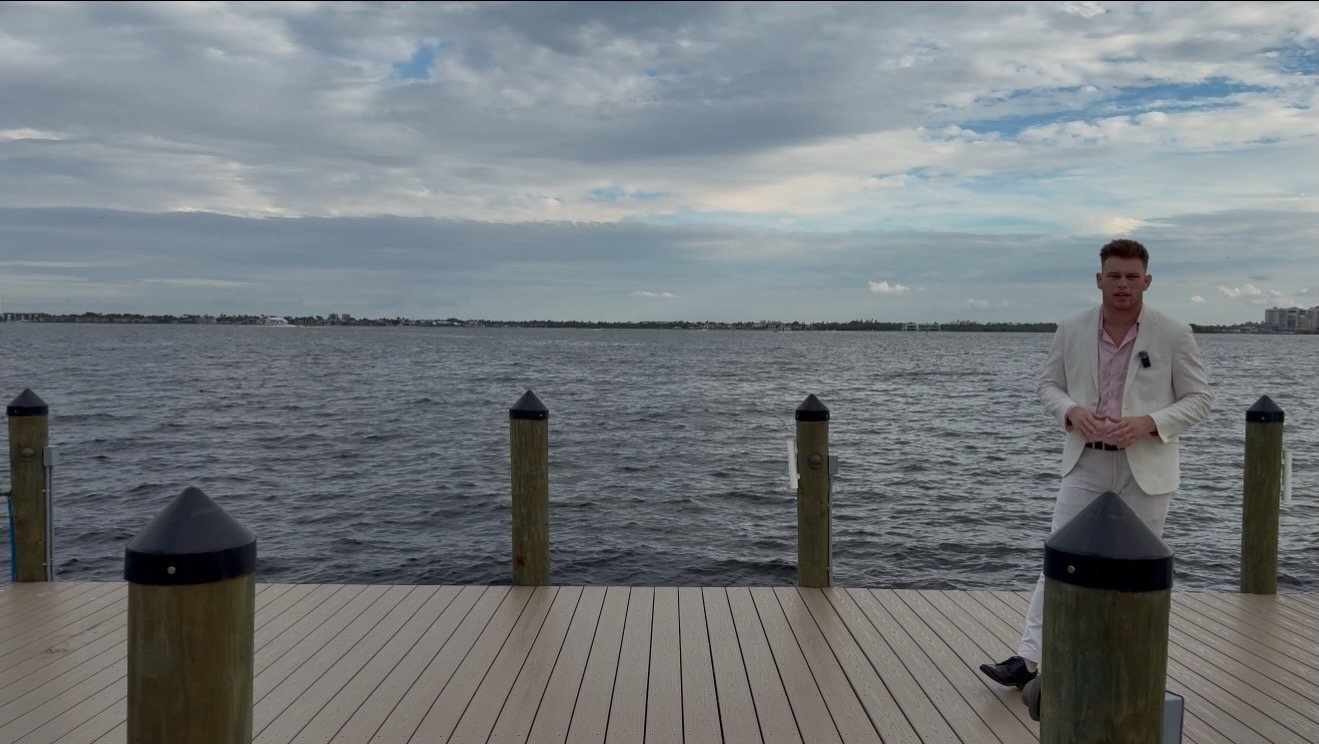
I’m Brayden Milner, a third-generation Realtor with Florida Future Realty, born and raised in Cape Coral. Real estate isn’t a career I chose out of a catalog. It’s the water I grew up swimming in. My mom Susan has been selling here since 1994, my grandparents were here before that. The sellers I work with right now ask me variations of the same three questions: How much will it sell for, how long will it take, and what do I actually have to do to make it happen?
This article is the answer. The 3 P’s framework. The phantom listing trap that sinks more sales than any other single thing in this market. The Tale of Two Markets that means luxury sellers and regular sellers are playing two different games. Waterfront prep, the seawall conversation, inspection-period negotiation, closing math. By the end of this, you guys will be able to read a Cape Coral listing the same way I do.
Step 1: Decide to Sell, and Get Honest About Why
Every sale starts with a motivation. The motivation shapes the timeline, the pricing strategy, and how you handle pushback during negotiation. The sellers who get the cleanest outcomes can name their why in one sentence before they ever talk to an agent. The common Cape Coral seller archetypes I see, in rough order of frequency:
- Move-up. You bought a 1,400 sqft 3/2 in 2019, family grew, you want the 2,400 sqft pool home. Net proceeds stack onto your next down payment.
- Downsize. Kids are out, the four-bedroom on a 100-foot canal lot has gotten loud and expensive. Carrying-cost relief is part of the math.
- Relocation. Job moves you out of state. The sale needs to close on a specific date and fund the next purchase.
- Estate or probate. Heirs often out of state, years of deferred maintenance, emotional inventory attached. Speed and a clean transaction matter more than maximizing every dollar.
- Investment exit. Numbers don’t pencil at current carrying costs, or you’re rebalancing capital out of Florida real estate. Tax basis and timing are primary inputs.
- Insurance-driven. More common since Hurricane Ian. Fixed-income owners whose windstorm and flood premiums have doubled or tripled. (See The Cape Coral Insurance Landscape.)
Carrying-cost arithmetic decides how patient you can afford to be. A Cape Coral homeowner often runs $300-$700/month in taxes, $200-$500 in homeowners insurance, $150-$400 in flood (Zone AE waterfront), plus utilities and maintenance. That’s $650-$1,600 of carry, before the mortgage, every month you sit. Holding out for an extra $20K over six extra months can easily cost you $10K-$15K in carry. The right question is rarely “how do I get the most for this house.” It’s “how do I get the best net outcome, accounting for time, carry, and certainty.” Waiting for “the market to recover” is a real option only if you’ve costed it out honestly. Otherwise, waiting is hoping. The 2021-2022 peak is not coming back in any timeline that matters for your decision.
Step 2: The 3 P’s, the Operating System for Selling in This Market
Everything that follows fits under three letters: P, P, and P. Price it right, present it well, promote it everywhere. That’s the entire seller doctrine in a buyer’s market. In a market with 6+ months of inventory, you can’t fix bad pricing with great photos, you can’t fix mediocre presentation by spending more on ads, and you can’t fix invisible promotion by quietly cutting the price. All three have to land, and they have to land together, from day one. Listings that violate any single P become what we call phantom listings. (Full deep dive in The 3 P’s Framework.)
Step 3: Price, the First P and the Single Most Important Decision
Price is the lever that does the most work and the lever sellers fight the hardest about. In a buyer’s market, day-one pricing is not a starting bid. It is the answer to “what does this house actually trade for right now.” Anything other than that answer leaks attention, time, and money.
The First 14 Days Are Where the Attention Lives
When a listing hits the MLS, it goes out to every active Cape Coral buyer’s saved search overnight. The first 7-14 days are the densest concentration of buyer attention you will ever get. After day 14, the listing falls out of the new-listing feed. By day 30, you’re past your peak. If your day-one price is too high, you burn that highest-attention window on the wrong audience: the buyers who would have written at the correct price never see your listing because their filters exclude it. By the time you cut 60 days later, the DOM clock is at 80+ and showings assume something is wrong with the house. You often end up with a worse offer than the one you would have had at correct day-one pricing, because stale listings invite lowballs in a way fresh listings don’t.
The Phantom Listing Trap
“Phantom listings” is the phrase for the chunk of Cape Coral inventory sitting at peak-2022 prices, ignoring six months of comps, with sellers who have decided the market is wrong and they are right. They inflate the active inventory number, sit for 150+ days, and eventually cancel, expire, or finally cut to a price they could have started at. Owners who refinanced near the peak or watched a neighbor close at it anchor to that data and treat it as a floor. Current comps feel like an insult. The market doesn’t care: buyers price off the last 90 days of closed sales, not the last 24 months.
The math is brutal. Florida Realtors data shows sale-to-list ratios around 97-98% citywide (see floridarealtors.org). That’s measured against final list after reductions, so discount from original list is meaningfully larger. A listing that starts $40K too high, sits 90 days, cuts twice, and finally sells at 97% of final list often nets the seller less than one that started right and sold in 30 days at 99% of original list. Phantom listings don’t get top dollar. They lose money in slow motion.
The Tale of Two Markets: Which Game Are You Playing?
Since late 2025, Cape Coral has been operating as two effectively separate economies, and your pricing logic depends on which one your property sits in. We call it the Tale of Two Markets.
Market 1: Luxury, cash, and seasonal. Waterfront gulf-access homes, pool homes above $700K, golf-course properties, second-home purchases. Cash share in this tranche routinely runs above 40%, well above the citywide average. These buyers are less rate-sensitive, more sensitive to seasonal timing (October through Easter). Luxury sellers get more pricing leeway, but the window between ambitious and delusional is wider, not infinite.
Market 2: Regular, leveraged, primary-residence. Off-water single-family in the $300K-$500K band, condos, villas, townhomes. Buyers financing at 6-7%, sensitive to insurance premiums and HOA fees, with plenty of inventory to choose from. Regular sellers don’t get pricing leeway. You hit all three P’s or your listing becomes phantom inventory. A $1.4M direct-access pool home on the Yacht Club and a $380K off-water 3/2 in NE Cape are not the same market and can’t share a strategy.
How I Actually Price a Cape Coral Home
When I sit at a listing appointment, the pricing analysis I bring is four data layers: recent closed sales (last 90 days, same canal tier, same construction era, similar bed/bath/sqft, tight radius), active competition (what you’ll compete against in your price band), pending sales (the leading indicator, since these become closed comps in 30-60 days), and segment-specific dynamics (canal hierarchy, build era, flood zone, roof age). What I will not do is pad the listing $30K to “give us room to negotiate.” Negotiation room comes from a correctly priced listing that attracts multiple interested buyers. Padding the price kills the showing volume that creates real negotiating room in the first place.
Here’s how I actually land on a number. I start with what’s closed in the same segment over the last 90 days, not what’s currently listed. Active listings tell you what sellers hope to get; closed sales tell you what buyers actually paid. From there I adjust for the things that move price inside a single ZIP code: canal hierarchy and whether the access is direct gulf or fixed-bridge, build era, flood zone, and the age of the roof and major systems. The final gut check is simple: at this number, would I personally write an offer on this house? If the answer is no, the price is wrong, and no amount of marketing fixes a wrong price.
Step 4: Presentation, the Second P
Once the price is right, presentation determines whether a buyer scrolling Zillow at 11 p.m. clicks through or keeps going. In a market with 6-7 months of inventory, the visual filter is brutal. Buyers see dozens of listings a week, pattern-matching against everything else in their price band. Your job, and mine, is to make sure they stop scrolling.
Pre-Listing Prep
The pre-listing pass is the cheapest lift you have. Three buckets, in order of cost-to-impact ratio:
- Declutter aggressively. Pack early. Half-empty closets. Counters clear. Family photos boxed. Buyers need to see the house, not your stuff. Costs nothing but time, outsized impact on photos.
- Neutralize. Bold paint comes down. Teal accent wall goes white or warm gray. Wallpaper from 2003 comes off. Fewer “what was the previous owner thinking” moments, the better.
- Fix the obvious deferred items. Cracked entryway tile, dangling light fixture, hole in the lanai cage, dishwasher that doesn’t drain. Inspectors will list them, buyers will see them, renegotiation will key off them. Fix them ahead of time and they don’t become negotiating points.
How much prep I recommend scales with the price tier. On an off-water home in the mid-three-hundreds, I focus on the cheap, high-leverage items: fresh neutral paint, a deep clean, declutter, and knocking out the deferred maintenance buyers will flag anyway. On a higher-end gulf-access home, the bar is higher, staging consultation, real attention to how the dock and seawall present, and sometimes a pre-listing inspection so we control the narrative on big-ticket items instead of reacting to a buyer’s inspector. The sellers who get burned are almost always the ones who skip prep entirely, list strictly as-is to save a weekend of work, then watch the first inspection reopen every dollar they tried to save.
Photography, Video, and Drone: Table Stakes in 2026
Professional listing photography is not optional, and neither is a video walk-through. In 2026, video tours are table stakes. The buyer three states away starting their search on YouTube and Instagram isn’t waiting for your open house. They’re watching the video at 11 p.m., deciding whether the property is worth a flight down. What every Cape Coral listing should have on day one:
- Professional still photography, well-lit, wide-angle, interior and exterior
- A video walk-through that shows actual flow, not a slideshow set to music
- Drone aerials, especially for waterfront. Buyers want to see canal tier, dock, seawall, neighborhood context
- A 3D virtual tour (Matterport or equivalent) for out-of-state buyers walking remotely
- A floor plan with dimensions. Eliminates a huge percentage of buyer questions before they’re asked
For waterfront, the drone shot does real work: bridge clearances, canal width, distance to the river, proximity to amenities. It’s the single image that proves a “direct access” claim in a way no MLS field can. (Full canal-tier context in The Cape Coral Canal System.)
Curb Appeal, Dock, and Seawall Presentation
The exterior is the first impression in person and often online. Fresh mulch, lawn cut tight, front door pressure-washed and ideally a fresh coat of paint. Easy, cheap, big impact. For waterfront, the back yard is the front yard: dock pressure-washed, boat lift cleaned up, seawall passed for obvious cosmetic issues, pool sparkling, cage cleaned. The drone shot of the back yard will be one of the most-viewed images on the entire listing. A grimy seawall cap and a dock with peeling boards reads as deferred maintenance in a way that’s hard to overcome.
Staging: Occupied vs Vacant
Occupied homes get a soft stage: rearrange existing furniture, neutralize, declutter, add a few staged touches. Vacant homes have two paths: full professional staging (low thousands per month, worth it on higher-priced listings) or virtual staging in the photography (cheaper, lower fidelity, useful for entry-level). Vacant unstaged homes photograph poorly, show poorly, and read smaller than they are. Empty houses don’t let buyers “imagine their own stuff.” They feel like soulless boxes. Spend the money or spend the time.
Step 5: Promotion, the Third P
Promoting a Cape Coral listing in 2026 is more than a sign in the yard. The MLS is the floor, not the ceiling. Once your listing hits MLS, it syndicates to Zillow, Realtor.com, Trulia, Redfin, and every other portal automatically. Sellers who stop there leave demand on the table. What real promotion looks like for you guys when you list with my team:
- Social media distribution. Instagram, Facebook, TikTok carousels and short-form video. Local pool plus out-of-state migration buyers researching Cape Coral content.
- YouTube full property tour. The Milner Team channel (@themilnerteam) gets a long-form walk-through for almost every listing. Pulls relocation buyers who’ve been watching Cape Coral content for months before they ever contact an agent.
- Targeted Facebook and Google ads. Paid placement geo-targeted to high-migration source markets (Midwest, Northeast, Canadian Great Lakes) and price-band targeted.
- Just Listed email blast. The team’s buyer database gets a dedicated email the day the listing goes live.
- Print mailer for waterfront. Old-school, still works for higher-end waterfront, reaches existing waterfront owners eyeing move-up or move-down.
- Broker network and team push. Florida Future Realty has a wide internal network and we push every listing through it in week one.
My honest take on promotion: most of it is theater, and a little of it actually drives showings. The channels that consistently produce real buyer activity are a sharp MLS listing with professional photography, syndication to the major portals where buyers actually search, and the team and broker network pushing hard in week one while the listing is fresh. Print mailers still pull on higher-end waterfront. What I don’t chase is vanity reach, impressions and boosted-post numbers that look good in a seller update but never put a qualified buyer through the front door. I’d rather spend the effort making the listing itself impossible to scroll past than buy clicks that don’t convert to appointments.
Step 6: Showings and Open Houses
Once the listing is live, showing volume in week one or two is your real-time feedback loop on whether the 3 P’s are landing. Heavy volume means price is right and photos work. Crickets means something is off and you need to diagnose fast. Showing protocol is straightforward: buyer’s agents request through MLS scheduling, sellers should be out of the house, pets crated or removed, lights on, blinds open, AC comfortable. Open houses are a mixed bag. In a hot market they pulled real buyers. In the current buyer’s market, traffic is mostly nosy neighbors and tire-kickers. I run them selectively, usually the first weekend.
Showing feedback is the diagnostic. I follow up with every buyer’s agent for honest feedback. Patterns matter more than any single response. If five agents in two weeks say “the kitchen feels dated,” that’s signal. If two say “price is too high relative to condition,” that’s signal louder. Use the feedback to adjust price or presentation in real time, not at day 60 when it’s too late.
Step 7: Offers and Negotiation
Offers in Cape Coral right now come in two flavors: single-offer (most common in the regular tranche) and multiple-offer (still happens in the luxury cash tranche on the right property). The framework differs for each.
Single-Offer Scenarios
What most regular-tranche sellers should expect. A buyer writes below list with contingencies (inspection, financing, appraisal) and a proposed close date. Your options are accept, counter, or reject. The right move depends on how the offer compares to current comps, how strong the buyer is (cash vs financed, pre-approval quality, earnest money), and how long you’ve been on market. The temptation to reject anything below list is strong and usually wrong. In a buyer’s market, the first offer is often the best offer, because it comes from the most-motivated buyer who’s been watching your listing and is ready to act. Sellers who reject out of pride end up six weeks later wishing they’d taken it. Counter, negotiate, find the deal.
Multiple-Offer Scenarios
Less common but they still happen on the right property. Direct gulf-access pool homes in turnkey condition, priced correctly, can still pull two or three offers in the first weekend during winter season. When multiple offers come in, the listing agent’s job is to compare them on more than just headline price: cash vs financed (cash typically faster and more certain), contingencies, proposed close date, and the strength of the buyer (pre-approval quality, earnest money). My job at that point is to keep you out of two traps: grabbing the highest headline number when a cleaner, more certain offer is sitting right behind it, and leaving money on the table by accepting the first thing that comes in. When there is genuine multiple-offer interest, I’ll often call for highest-and-best so every buyer puts their real number forward, then we weigh price against certainty together. This is also where having an agent earns its keep: the most recent NAR Profile of Home Buyers and Sellers consistently shows agent-assisted sales commanding a meaningful median premium over for-sale-by-owner, which is part of why the vast majority of sellers use an agent.
Seller Credits vs Price Cuts
A $5K price cut and a $5K seller credit toward closing costs are economically identical for the seller. Same outcome, different label. The only difference is which line on the closing disclosure absorbs it. Don’t get emotional about the label.
Step 8: Inspection Period, Where Deals Get Real
You’ve accepted an offer. The buyer has 10-15 days (in most Cape Coral contracts) for inspections. This is where roughly 3-5% of deals fall apart, and where most negotiation happens after the initial offer is accepted. The buyer’s inspector will produce a report longer than the seller expects. Some is genuinely concerning. Most is normal wear and tear listed for liability. The buyer’s agent typically comes back with a repair request: items to fix, credit, or address before closing.
Repair Credit vs Repair Completion
Two ways to respond: do the repairs yourself before closing, or offer a credit and let the buyer handle it post-close. Doing repairs yourself means you control the contractors and cost, but adds friction and the buyer may not be happy with the quality. A credit is cleaner and faster but buyers tend to ask for more credit than the repair would actually cost. Major items (roof, HVAC, electrical): credit is often cleaner because the buyer chooses their own contractor and warranty. Cosmetic and small fixes: sometimes faster to just do it. The number that matters is the net concession from the seller, not which path it takes.
Waterfront-Specific: Seawall, Dock, and Pool
Waterfront sellers face inspection items off-water sellers don’t. The seawall is part of the house. So is the dock, the boat lift, the pool, and the cage. Each is its own sub-report and a potential renegotiation point. Cape Coral seawalls run 30-50 years before significant work. Replacement runs roughly $400-$900 per linear foot depending on material (concrete panel toward the $650-$900 end, vinyl less; complex barge-access jobs can run higher), so an 80-100 foot lot is roughly $52K-$90K for a concrete full-replacement. If the buyer’s marine inspector finds tieback corrosion, voids, or active failure, the negotiation swings sideways fast.
The proactive play: get a marine inspection of the seawall and dock before listing, price with that condition in mind, and disclose. When the buyer’s inspector finds what your inspector already found, no surprises and no renegotiation. The pre-listing marine inspection runs $500-$800 and is the highest-leverage money a waterfront seller can spend. (Full waterfront-cost breakdown in The Cape Coral Canal System.)
4-Point and Wind Mitigation: Buyer’s Insurance Side
The buyer’s insurance carrier requires a 4-point inspection (roof, electrical, plumbing, HVAC) before binding; a wind mitigation inspection is optional but nearly always worth ordering. The 4-point flags age and condition on the four major systems. Wind mit documents storm-resistant features (roof shape, attachment, opening protection) that drive premium credits. Sellers don’t pay for these, but results affect the deal. A roof older than 15 years can become a deal-breaker because the buyer can’t bind insurance, or only through surplus-lines at painful premiums. If the carrier says no, the deal blows up regardless of inspector report. (More in Cape Coral Housing Stock.)
Re-Negotiation Guardrails
The buyer is going to ask for something. The guardrail I give sellers: accept legitimate findings (seawall really is failing, AC really is on its last legs), push back on cosmetic and routine items, and don’t let renegotiation turn into a second auction. If the buyer is using inspection as a second crack at the price, the deal may not be saveable.
Step 9: Financing Contingency Removal
After inspection comes the financing contingency window. The buyer’s lender orders the appraisal, runs final underwriting, and verifies the insurance binder, typically 25-35 days from acceptance. Three things have to happen: appraisal at or above contract price (most Cape Coral appraisals come in fine because contracts already reflect the corrected market), loan approval clears underwriting, and insurance binder is verified. Once these clear, financing contingency is removed and the deal is substantially more secure. Buyer’s earnest money is at risk if they walk for any non-contingency reason.
Step 10: Closing and Seller Proceeds
The title company orders title work, gets payoff statements, prepares the Closing Disclosure (which the buyer must receive at least 3 business days before close), and schedules. What sellers take home is sale price minus a stack of line items:
- Existing mortgage payoff (principal plus accrued interest through close)
- Real estate commission (typically 5-6% total historically, with more variation post-NAR settlement)
- Seller’s closing costs (owner’s title insurance, customarily paid by the seller in Lee County; doc stamps at $0.70 per $100 of sale price, prorated taxes, recording fees, settlement fees, HOA estoppel if applicable)
- Repair credits or concessions to the buyer
- Outstanding UEP assessment payoff if the seller pays off rather than transfers
Full breakdown in Cape Coral Closing Costs. Seller proceeds are typically 88-93% of sale price after deductions, depending on mortgage payoff and commission. Budget on net proceeds, not headline price. Most Cape Coral sellers move out by close, but post-closing occupancy agreements (seller pays rent to buyer for 7-30 days) are common when timing doesn’t line up. Negotiate upfront in the contract, not the week before closing.
Step 11: Post-Closing, Taxes and Forwarding
A few items in the weeks after closing:
- 1099-S reporting. The title company files a 1099-S with the IRS reporting gross proceeds. Your CPA uses it the following spring.
- Capital gains. Primary residence owned/lived in 2 of last 5 years gets federal exclusion of $250K single / $500K married. Most primary-residence sellers owe no federal cap gains. Florida has no state income tax. Investment property is different. Consult your CPA.
- Forwarding address. Update with USPS, Lee County Property Appraiser, insurance carrier, remaining utilities.
- Cancel utilities and insurance. Electric, water, sewer, internet, lawn, pest. Cancel homeowners and flood effective day of closing (or transfer if assumable, rare for homeowners and more common for flood).
Florida property tax bills run on a calendar year, so you’ll owe a prorated share through day of closing. The title company handles it on the closing disclosure. (More in Cape Coral Property Taxes.)
Cape Coral Specifics Every Seller Should Know
A few items that matter more in Cape Coral than in most markets:
UEP Assessments
The city’s Utilities Extension Project (UEP) has been steadily extending water and sewer to areas previously on well and septic. If your property is in a UEP zone, you may have an outstanding balance. Disclosure is required. You can pay it off at closing or transfer to the buyer (typically reduces the price the buyer is willing to pay). Know your exact payoff balance before listing. The city makes this lookup public.
Pre-Ian vs Post-Ian Disclosure
Hurricane Ian (September 2022) put water through Cape Coral homes that had never flooded before. If yours took water and was repaired, disclose. If you filed an Ian claim, disclose. Document any roof, electrical, or HVAC replaced as part of post-Ian repair. Florida sellers have a clear duty to disclose material defects. Hiding an Ian claim almost always backfires when the buyer’s inspector finds the evidence anyway, and it opens post-close legal exposure not worth the marginal sale price gain.
Insurance Claims History
Buyers and their insurance carriers will pull a CLUE report (Comprehensive Loss Underwriting Exchange) on the property, which shows any insurance claims filed in the last 5 to 7 years. If the property has prior windstorm or water claims, that history will surface. Disclose what’s known. Don’t get caught by a buyer’s CLUE report.
Winter Season vs Off-Season Listing Timing
Cape Coral’s buyer flow is seasonal. Strongest months are November through March, with peak in January-February when seasonal buyers are physically here. Listing in October or November positions you to catch peak season head-on. Listing in May or June puts you in the slowest part of the year, when buyer flow is mostly Florida-to-Florida movers rather than out-of-state relocators. Off-season listings still sell, but they sit longer and the buyer pool is shallower.
Days on Market and Inventory Reality
Citywide median DOM is running 80+ days, with 6-7 months of inventory. That’s the baseline you guys are competing against. Correctly priced, well-presented homes in the regular tranche often outperform the average, sometimes meaningfully. Direct gulf-access pool homes in turnkey condition during winter season can still move in under 30 days. The median isn’t your fate. It’s the average across phantom listings, correctly priced listings, luxury, and regular tranches all blended together. (Florida Realtors and the National Association of Realtors publish ongoing market data at floridarealtors.org and nar.realtor.)
The Honest Take on FSBO and Discount Brokerage
Every seller asks about FSBO and discount listing brokerages, so direct answer: in a buyer’s market with 6-7 months of inventory, the case for FSBO has gotten weaker, not stronger. The MLS is the gateway, and without it your buyer pool shrinks dramatically. Discount brokerages list on MLS for a flat fee, which solves visibility but not the other two P’s: you’re still on the hook for pricing strategy, presentation, marketing, showings, offer evaluation, negotiation, and transaction logistics through close. National and local data is consistent: FSBO sellers net less on average than represented sellers, even after commission. (Full breakdown in FSBO Cape Coral.)
Why Listings Expire, and How to Avoid It
A listing expires when the agreement term runs out and the property hasn’t sold. Cape Coral expireds are elevated compared to the peak market years because phantom listings are everywhere. The single most common reason a listing expires is overpricing. Second is bad presentation that wouldn’t have mattered at the right price but does at the wrong one. Third is invisible promotion. The answer is almost always the 3 P’s plus a real reset on day-one price: re-list at the right number, fresh photography, real promotion plan, and accept that the previous DOM history is visible. (Full playbook in Why Your Listing Expired.)
Frequently Asked Questions
How long does it take to sell a home in Cape Coral right now?
Citywide median DOM is around 80+ days, with 6-7 months of inventory. Correctly priced, well-presented homes often outperform the median, particularly gulf-access waterfront during winter season (November through March). Overpriced or poorly presented listings can sit 150+ days and may not sell at all without significant reductions or a re-list. The single biggest determinant of time on market is day-one pricing.
What are the 3 P’s of selling a home?
Price, Presentation, and Promotion. Price it right, present it well, promote it everywhere. All three have to land together from day one. Overpricing cannot be overcome by great photos. Poor presentation undermines a correct price. Invisible promotion leaves a correctly priced and well-presented listing competing against ad-spend-backed competitors for the same buyer pool.
What is a phantom listing in Cape Coral?
A phantom listing is an active listing priced at or near 2021-2022 peak values that has been sitting on the market for months without meaningful price reductions, even though current comps no longer support the asking price. Phantom listings inflate the active inventory count without representing real supply that will transact at market value. They typically end up either expiring, canceling, or finally cutting to a price the seller could have started at, often netting less than they would have with a correct day-one price.
Should I sell my Cape Coral home now or wait for the market to recover?
Depends on your carrying costs and realistic recovery timeline. The current market is a correction from the 2021-2022 peak that has settled into a buyer’s market with 6-7 months of inventory. No evidence of a near-term return to a seller’s market. High carrying costs and clear motivation: waiting often costs more in carry than it gains in price. Low carrying costs and no specific need to sell: holding is legitimate. Do the math on your situation, don’t rely on hope of a reversal.
Do I need to replace my seawall before selling a waterfront home in Cape Coral?
Not necessarily, but seawall condition will be a negotiation point regardless. Buyers and their marine inspectors will flag deterioration. A pre-listing marine inspection (typically $500-$800) lets sellers know the condition upfront, price accordingly, and avoid surprises. Full replacement runs roughly $400-$900 per linear foot depending on material (concrete panel $650-$900), or about $52,000-$90,000 for concrete on a typical 80-100 foot canal lot. Whether to replace before listing depends on wall condition and how much pricing room you’d lose by leaving a known issue unresolved.
What disclosures do I need to make when selling a home in Cape Coral?
Florida sellers must disclose known material defects, prior insurance claims, hurricane-related damage and repairs (including Ian), outstanding UEP assessment balances, HOA fees and rules, and known issues with the roof, electrical, plumbing, HVAC, pool, dock, or seawall. The Florida Realtors seller disclosure form covers most categories. The buyer’s insurance carrier pulls a CLUE report showing past claims, so non-disclosure rarely works. If you know about it, disclose it.
What are typical seller closing costs in Cape Coral?
Typically 7-12% of sale price, depending on commission structure, title costs, doc stamps, and any negotiated credits. Note that mortgage payoff is a debt settlement, not a closing cost, though it does reduce seller net proceeds. Biggest line items: real estate commission (historically 5-6% total, more variation post-NAR settlement), owner’s title insurance (paid by the seller per Lee County custom), Florida doc stamps on the deed at $0.70 per $100 of sale price, prorated property taxes, recording fees, and HOA estoppel or transfer fees. Full breakdown in our Cape Coral Closing Costs guide.
Will I owe capital gains tax when I sell my Cape Coral home?
Primary residence owned and lived in for at least 2 of the last 5 years may qualify for the federal exclusion: $250,000 single, $500,000 married filing jointly. Most primary-residence Cape Coral sellers fall within these limits and owe no federal cap gains. Florida has no state income tax. Investment property sales carry federal capital gains liability plus depreciation recapture. Always consult a CPA before assuming your specific outcome.
The Bottom Line
Selling in Cape Coral in 2026 is workable, but it is no longer the sign-in-the-yard-and-wait market it was in 2021. The current market rewards sellers who price to current comps from day one, present at a professional standard, and promote across every channel where qualified buyers actually look. Hit all three P’s and you get a clean transaction in a reasonable timeline. Miss any of the three and you turn into a phantom listing, sit for months, and eventually accept less than you would have at a correct day-one price. If you guys take nothing else from this, take the 3 P’s, the phantom listing trap, and the Tale of Two Markets framing into your next listing decision.
The Cape Coral specifics layer on top: waterfront sellers carry seawall and dock exposure that off-water sellers don’t, UEP assessments and Ian-related disclosure need to be handled upfront, winter-season timing matters. None of this is a reason not to sell. All of it is a reason to do it deliberately. (For the other side of the table, see How to Buy a Home in Cape Coral.)
Reach out and let’s talk about your Cape Coral home sale. Whether you’re listing this month or thinking about winter season, I’ll give you a real comp-based analysis, an honest read on where your property sits in the Tale of Two Markets, and a straight answer on whether the timing works for your situation. No pressure, no theater, just the honest read you’d give a friend over coffee.