

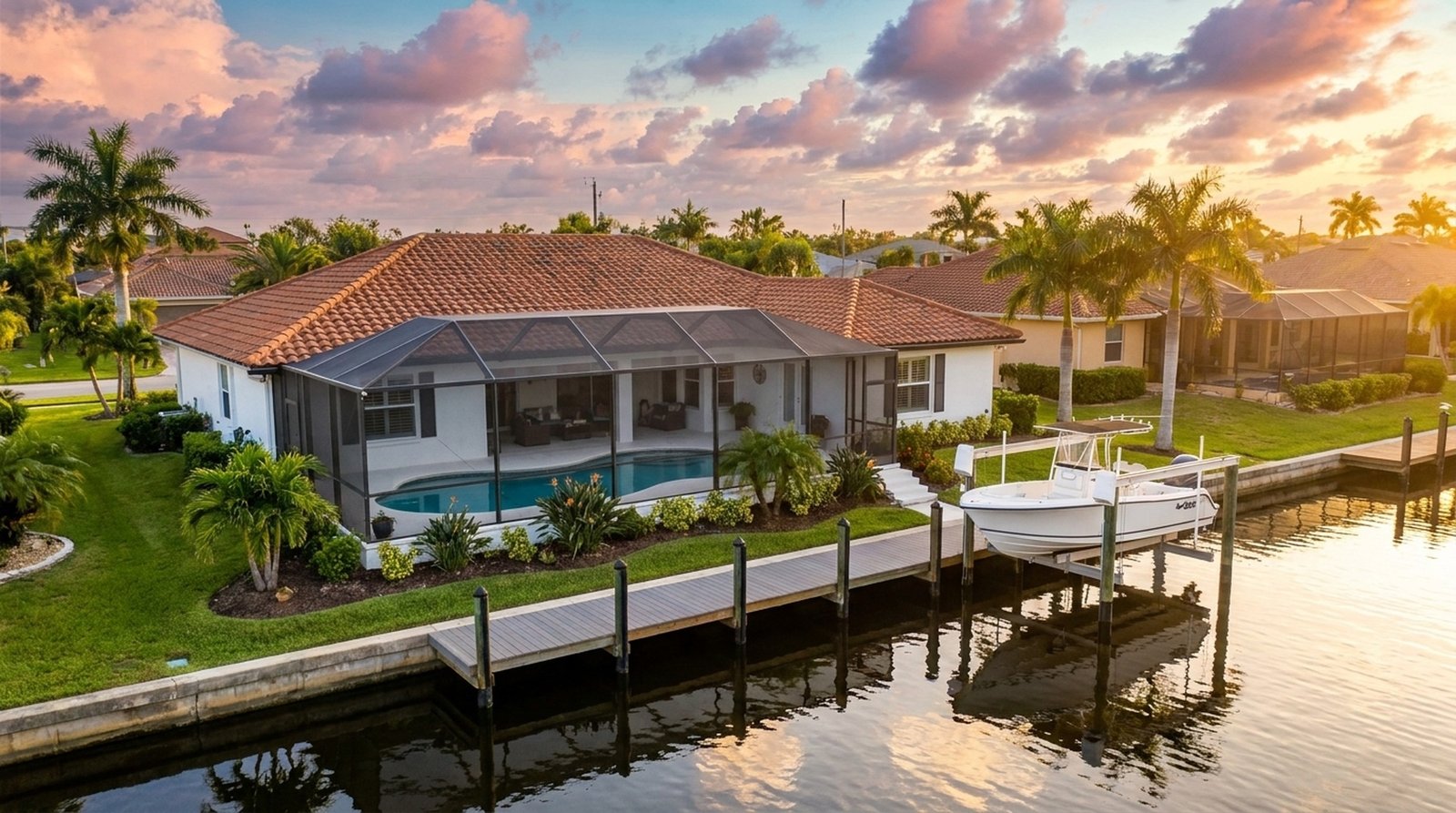
Updated June 2026.
Buyer caveat: This is buyer education from a Realtor perspective, not legal, tax, title, insurance, appraisal, construction, accounting, or financial advice. Before you choose a new-construction home or an existing home, verify the contract, insurance, flood zone, taxes, inspections, financing, and builder or seller obligations with the appropriate licensed professionals for your situation.
How I Explain New Construction vs. Existing Homes in Cape Coral
I’m Brayden Milner, a third-generation Realtor in Southwest Florida. When a buyer asks me whether they should buy new construction or an existing home in Cape Coral, I do not start with a generic pros-and-cons list. I start with the actual property, the street, the utility situation, the insurance conversation, the inspection risk, and the exit plan.
The older version of this article was too generic. This rewrite is the way I would frame the decision with a real buyer: what to verify, what can be attractive, and what can cost you money if you assume too much.
The Short Version
New construction can be a strong fit when you want a modern floor plan, current-code construction, fewer immediate cosmetic projects, and a cleaner starting point for insurance and maintenance questions. Existing homes can be a strong fit when you want a finished neighborhood feel, mature landscaping, established utility history, possible upgrades already completed, or a location where there is less vacant-lot uncertainty around you.
Neither option is automatically “better.” In Cape Coral, the better choice usually depends on the exact home, the builder or seller, the flood zone, the utility assessment picture, the inspection findings, the insurance quote, and how long you expect to own it.
What New Construction Can Give You
1. A current-code starting point. A newly permitted home is built under the applicable Florida Building Code in effect for that permit cycle. That does not mean “no risk,” and it does not replace inspections, but it gives you a different baseline than a home built under older code cycles. Source: Florida Building Commission / Florida Building Code.
2. A clearer permit and inspection trail during the build. In Cape Coral, building permits and inspections run through the City’s building process. For a new home, I want buyers to understand what has been permitted, what has passed inspection, and what still needs to happen before closing. Source: City of Cape Coral Building Division.
3. A modern layout. Many new homes are designed around open living areas, split-bedroom layouts, higher ceilings, impact openings, and low-maintenance finishes. Those features can matter if you are comparing a brand-new spec home to an older resale that needs flooring, windows, roof, HVAC, plumbing, or electrical updates. Verify the exact specifications in the builder contract and permit documents, not in marketing copy.
4. Builder incentives may be available. Some builders use rate buydowns, closing-cost credits, appliance packages, or pricing adjustments to move inventory. Those incentives are contract-specific and lender-specific, so I treat them as terms to verify, not as guaranteed savings. A buyer should compare the full net cost with their lender, insurance agent, and closing team before assuming the incentive is the best deal.
Where New Construction Can Surprise Buyers
Builder contract terms matter. A builder contract is not the same document as a standard resale contract. The inspection windows, deposit rules, completion timelines, change-order language, warranty language, and cancellation rights can be different. That is a contract review issue, so buyers should involve the appropriate legal and lending professionals before relying on a verbal explanation.
The street around the home matters. A beautiful new house can still sit on a street with vacant lots, ongoing construction traffic, limited landscaping maturity, or future builds that change the feel of the block. I like buyers to drive the street at different times and look at the surrounding lots before they fall in love with the finishes.
Utilities and assessments need to be verified. Cape Coral’s utility history is property-specific. Buyers should verify water, sewer, irrigation, and any related assessment status through the City rather than assuming every street is the same. Source: City of Cape Coral Utilities Extension Project.
Flood zone and insurance still matter. Newer does not automatically mean cheaper to insure. A buyer should verify the FEMA flood zone, elevation information when applicable, wind mitigation details, and actual insurance quotes before deciding the monthly payment works. Source: FEMA Flood Map Service Center.
What Existing Homes Can Give You
1. A real track record. With an existing home, you can inspect how the home has aged, review visible maintenance, compare permits to the improvements you see, and ask for seller disclosures. That history can be valuable if the roof, HVAC, windows, pool, seawall, dock, or interior systems have been maintained well.
2. A more established setting. Many existing homes sit on streets where the surrounding homes, landscaping, utility status, and traffic pattern are easier to understand because the area is already built out. That can help a buyer judge whether the location fits their day-to-day life.
3. Upgrades may already be done. A resale may already have a pool, screened lanai, fence, window treatments, appliances, closets, landscaping, dock, lift, seawall work, or storm protection. Those items need to be inspected and verified, but they can change the real comparison against a new home that looks cheaper before the after-closing add-ons.
4. You can compare public records and permits. Lee County property records and City permit records help buyers verify ownership data, assessed values, year built, and recorded permit history. Sources: Lee County Property Appraiser and City of Cape Coral Building Division.
Where Existing Homes Can Surprise Buyers
Deferred maintenance can hide behind pretty finishes. Paint and staging are not a substitute for a roof review, HVAC review, plumbing review, electrical review, moisture check, sewer-scope discussion when appropriate, pool inspection, seawall evaluation, or insurance quote. I want buyers to understand the systems before they negotiate repairs or credits.
Older improvements may not match permits. If a home has additions, enclosed spaces, remodeled rooms, docks, lifts, pools, sheds, or major system work, I want the buyer to verify the permit history and talk through anything that does not line up. That is not about assuming something is wrong; it is about avoiding surprises after closing.
Insurance can change the budget. The monthly payment is not just principal and interest. Taxes, homeowners insurance, flood insurance when required or chosen, utilities, HOA or condo fees, maintenance, and reserves can change the real affordability picture. That is why I ask buyers to collect quotes and estimates before treating the list price as the whole story.
My Buyer Process in the Field
When I am helping a Cape Coral buyer compare new construction against an existing home, I usually work through five questions:
- What is the all-in monthly cost? Price, loan terms, taxes, insurance, flood insurance, HOA or condo fees, utilities, maintenance, and reserves should be reviewed with the right professionals.
- What is the property-specific risk? Flood zone, elevation, roof, HVAC, plumbing, electrical, windows, seawall, dock, pool, drainage, and permit history matter more than a generic “new vs. resale” label.
- What has to be done after closing? A new home may need blinds, appliances, landscaping, fencing, pool, gutters, closets, or outdoor improvements. A resale may need system repairs or cosmetic updates.
- How negotiable is the seller or builder? Builders may negotiate differently than individual sellers. Incentives, price reductions, credits, timelines, and included features all need to be compared on net value.
- What is the exit plan? A buyer who may resell or rent in a few years should think about location, floor plan, insurance profile, utility status, and future buyer demand before choosing.
Bottom Line
If you want the cleanest answer, do not ask, “Is new construction better than resale?” Ask, “Which specific property has the better verified numbers, better risk profile, better location, and better exit plan for me?”
If you are comparing Cape Coral new construction and existing homes, I can help you build a side-by-side comparison using the actual properties you are considering: contract terms, insurance questions, flood zone, utility status, inspection risk, and likely after-closing costs. If you want the fuller buyer process first, start with the Buyer Guide.
Call or text The Milner Team when you are ready to compare real options.
Sources and Verification Links
- Florida Building Commission / Florida Building Code, current-code context for newly permitted construction.
- City of Cape Coral Building Division, permit and inspection process reference.
- City of Cape Coral Utilities Extension Project, utility/assessment verification starting point.
- FEMA Flood Map Service Center, flood-zone verification starting point.
- Lee County Property Appraiser, property record, assessed value, and parcel reference.
- Florida DBPR License Search, builder and contractor license verification.
Live new-construction searches: all new construction · new construction under 400K · affordable new construction.