

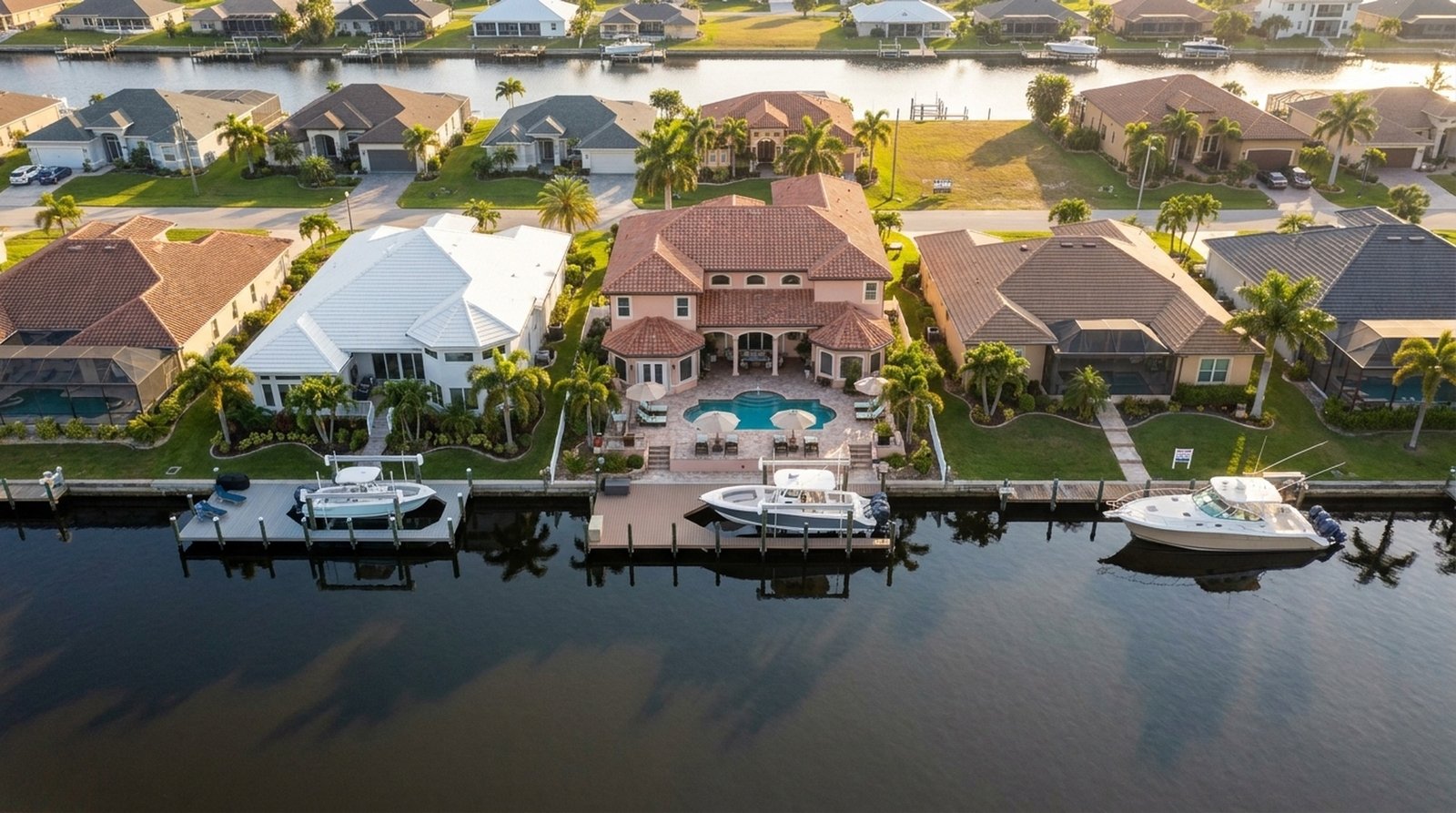
Updated June 2026.
Investor caveat: This is rental-market education from a Realtor perspective, not legal, tax, title, insurance, appraisal, accounting, property-management, lending, or financial advice. Rental income, expenses, financing, taxes, short-term rental rules, insurance, and investment returns are property-specific. Verify the numbers with your lender, CPA, attorney, insurance agent, property manager, and other appropriate licensed professionals before making an offer.
How I Would Look at Cape Coral Rentals in 2026
I’m Brayden Milner, a third-generation Realtor in Southwest Florida. I rewrote this page because the older version used broad rent ranges without source citations. I do not want a buyer underwriting a Cape Coral investment property from loose internet numbers, especially in a market where insurance, flood zone, utilities, property condition, and tenant profile can change the deal fast.
The right rental number is not “what somebody online said a Cape Coral home rents for.” The right rental number is the number supported by current comparable rentals, property-management feedback, public market data, and the exact features of the home you are buying.
The Public Rent Benchmark I Would Start With
For a public, repeatable benchmark, I use Zillow’s Observed Rent Index as a starting reference, then I verify against live rental comps. Zillow’s city-level ZORI series, the “all homes plus multifamily” index, which blends single-family homes, condos, and multifamily units, reported Cape Coral at $1,872.08 for April 2026 and $1,911.71 for June 2026, the latest month available. Zillow’s metro-level all-homes-plus-multifamily ZORI series for “Cape Coral, FL” reported $1,859.27 for April 2026 and $1,873.62 for June 2026. Because this index includes multifamily units, a single-family home will often rent above it: Zillow’s metro-level single-family-only ZORI read about $2,176 for April 2026. Sources: Zillow Research city ZORI CSV and Zillow Research metro ZORI CSV, retrieved July 18, 2026. Zillow revises these smoothed index series as new data comes in, so a given month’s value can shift slightly between retrieval dates.
Those two rental figures are index values, not promises for a specific house. A four-bedroom pool home, a smaller inland home, a waterfront home, a furnished seasonal rental, and a tenant-occupied annual rental can all behave differently. That is why I treat the public index as the first checkpoint, not the final underwriting number.
For context on value, Zillow’s city-level ZHVI series reported Cape Coral at $339,529.69 for April 2026. Source: Zillow Research city ZHVI CSV, retrieved July 6, 2026. That value index is not an appraisal, and it should not replace a property-specific valuation.
What the Index Does Not Tell You
The public rent index does not tell you whether the roof is insurable, whether the flood quote works, whether the pool equipment is near end of life, whether the seawall needs attention, whether the utility assessment status changes the carrying cost, or whether a specific tenant profile supports the rent you want. Those are property-level questions.
In the field, I see investors get into trouble when they focus on the top-line rent and skip the boring parts of the deal. The boring parts are usually where the profit disappears: insurance, repairs, vacancy, management, lawn and pool service, turnover costs, reserves, property taxes, flood coverage, utility assessments, and capital improvements.
How I Underwrite a Cape Coral Rental Conversation
1. Start with current rent evidence. I want to see active rentals and recently leased rentals that match the subject property as closely as possible: bedroom count, bathroom count, garage, pool, waterfront status, furnishing, pet policy, condition, location, and lease type. Public index data gives context, but property-level comps drive the offer conversation.
2. Separate annual rental from seasonal or furnished rental. Annual-rental underwriting is not the same as seasonal-rental underwriting. Lease length, vacancy assumptions, furnishing cost, cleaning, utilities, management, platform fees, and local rules can change the result. I do not mix those strategies in one spreadsheet unless the assumptions are clearly separated.
3. Verify taxes and assessed-value history. Lee County property records are the starting point for assessed value and parcel history. Buyers should also ask their lender, CPA, and closing team how taxes may change after a sale. Source: Lee County Property Appraiser.
4. Verify flood zone and insurance before you trust the cash flow. Flood-zone and insurance questions are not optional in Southwest Florida. FEMA’s Flood Map Service Center is a starting point for flood-zone research, but buyers should also get actual insurance quotes and review elevation information when applicable. Source: FEMA Flood Map Service Center.
5. Verify utilities and assessments. Cape Coral utility status can be property-specific. Before you underwrite a rental, verify water, sewer, irrigation, and any assessment questions with the City. Source: City of Cape Coral Utilities Extension Project.
6. Build reserves into the decision. A rental that only works if nothing breaks is not a conservative investment. Roof, HVAC, plumbing, electrical, appliances, pool equipment, seawall, dock, flooring, paint, landscaping, pest control, and storm preparation should all be part of the conversation when they apply to the property.
The Questions I Ask Before Calling a Deal “Good”
- What rent is supported by comparable rentals, not just a hopeful listing price?
- Is the rent evidence annual, furnished, seasonal, or short-term?
- What does the insurance quote do to the monthly number?
- Is flood insurance required by the lender, and would the buyer carry it even if it is not required?
- What does the inspection say about roof, HVAC, plumbing, electrical, pool, seawall, dock, drainage, and moisture risk?
- What repairs are needed before a tenant can move in?
- What management plan will the owner use if they are not local?
- What is the exit plan if rents soften, expenses rise, or the owner needs to sell?
My Field Take
Cape Coral can still make sense for investors, but I would rather be conservative and pleasantly surprised than optimistic and trapped. If the deal only works with the highest possible rent, the lowest possible insurance quote, no vacancy, and no repairs, I do not consider that a strong setup.
When I help a buyer look at rental property here, I want the decision to survive real-world friction. That means source-backed rent data, live comparable rentals, property-manager input, inspection findings, insurance quotes, flood-zone verification, utility verification, and a realistic reserve plan.
If you are looking at a Cape Coral rental property, send me the address before you write the offer. I can help you compare the public rent benchmark, the active rental competition, the property-level risks, and the questions you should ask before you rely on the income.
Sources and Verification Links
- Zillow Research city ZORI CSV, Cape Coral city-level observed rent index (all homes plus multifamily), April 2026 value $1,872.08, June 2026 value $1,911.71, retrieved July 18, 2026.
- Zillow Research metro ZORI CSV, Cape Coral, FL metro observed rent index (all homes plus multifamily), April 2026 value $1,859.27, June 2026 value $1,873.62, retrieved July 18, 2026.
- Zillow Research city ZHVI CSV, Cape Coral city-level home value index, April 2026 value $339,529.69, retrieved July 6, 2026.
- Lee County Property Appraiser, parcel, assessed-value, and property-record verification.
- FEMA Flood Map Service Center, flood-zone verification starting point.
- City of Cape Coral Utilities Extension Project, utility and assessment verification starting point.