
A home listing is a starting point, not an inspection, survey, or guarantee of accuracy.
In Cape Coral, Lee County, and across Southwest Florida, listings may show living area, lot size, year built, flood zone, HOA (homeowners association) fees, roof details, and water features.
Some details describe measurements. Others may come from public records, sellers, associations, or earlier listing information. Knowing the source matters when you plan a budget or make an offer.
How to read a listing: which fields are measured, and which are reported?
Square footage describes a measurement, but the number in a listing may come from public records rather than a recent measurement. Ask whether it means living area or total area. Do not assume a garage, screened lanai, or enclosed room is included in the stated living area. Request the source and consider an independent measurement if size matters to your decision.
Lot size describes land area, but a recorded figure does not replace a boundary survey. A survey can help identify property lines and easements. An easement gives another party certain rights to use part of the land. Do not treat a fence or online map as proof of a boundary.
Year built is commonly reported from property records. It does not establish the age of the roof, the date of later improvements, or whether additions received required approvals. Ask for records of major changes.
Flood zone is a classification shown on flood maps. It does not predict how much water may enter a home. Check FEMA’s flood map for the property and ask about past flooding. Flooding can occur outside designated high-risk areas. For Cape Coral context, see Cape Coral flood zones.
HOA fees are reported charges, not measurements. Do not assume an amount shown in a listing is current. Ask the association or its manager about dues, payment schedules, governing rules, and special assessments. A special assessment is an additional charge that an association may collect for particular expenses.
Why listings say “per the listing” or “buyer to verify”
These phrases signal that a detail needs confirmation.
“Per the listing” identifies the listing as the source of a statement. It does not show whether someone independently checked it.
“Buyer to verify” tells buyers to confirm details important to their decisions.
Neither phrase proves a claim is accurate or removes applicable disclosure duties.
Florida Realtors explains that sellers must disclose known facts that materially affect a home’s value when those facts are not readily observable and are not already known to the buyer. Real estate licensees also have duties to disclose known material facts.
Seller disclosures provide information, but they do not replace an independent inspection.
Ask your agent: “Did this information come from a measurement, public record, seller, or another source? When was it checked?”
FICTIONAL example: how to spot open questions
FICTIONAL SAMPLE, Not a real home or listing.
Cape Coral home. Living area: per the listing (UNVERIFIED). Lot size: public record (UNVERIFIED). Roof: recently replaced (UNVERIFIED). HOA: none reported (UNVERIFIED). Water feature: canal view (UNVERIFIED).
This example does not confirm living area, lot boundaries, or when roof work occurred.
“None reported” does not prove there are no association obligations or deed restrictions.
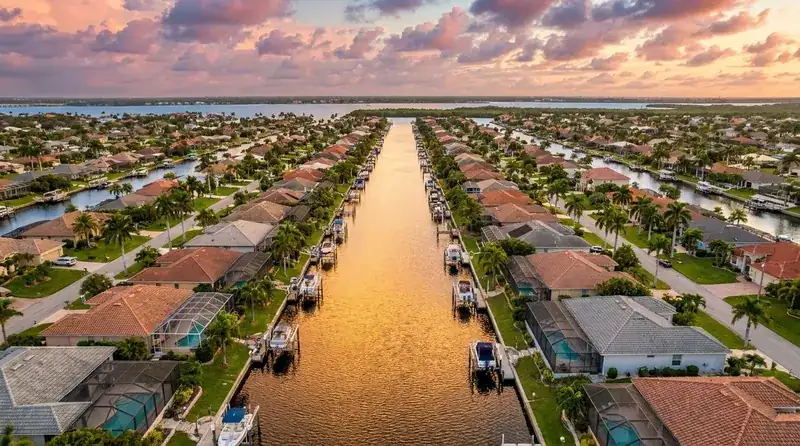
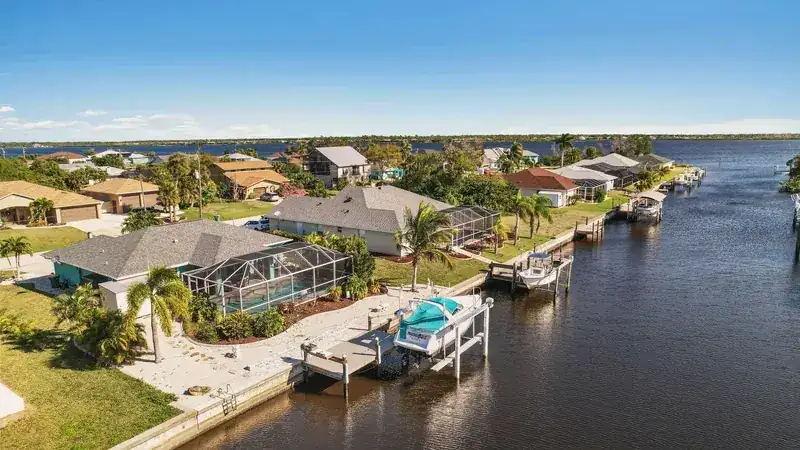
A canal view does not prove boating access, a route to open water, or legal rights to use the waterway. It does not establish Gulf access.
Each claim needs separate verification.
Ten things to verify before you rely on a listing
- Living area. Ask where the square footage came from. Compare available records and plans. If needed, request an independent measurement. Confirm which spaces are included.
- Lot dimensions. Review a survey with a qualified professional when property boundaries, easements, fences, or planned improvements matter. Do not rely on a listing map to establish property lines.
- Year built and additions. Compare property records with the home’s current layout. Ask when rooms were added, enclosed, or changed, and whether records document the work.
- Permits. Check the relevant city or county permitting office for work such as roof replacements and additions. Cape Coral’s permitting pages list a permit search and inspection scheduling. Ask the permitting office about missing or unclear records and whether required inspections were completed.
- HOA documents. Confirm whether an association applies. Request current governing documents, dues, budgets, known special assessments, and rules affecting your planned use of the property.
- Flood information. Check FEMA’s flood map. Request available elevation documents and review the seller’s flood disclosure. Ask about past flooding or water intrusion. A flood-zone designation alone does not describe every risk.
- Insurance. Obtain written insurance quotes for the specific home. Compare coverage, exclusions, deductibles, and costs. Ask whether separate flood insurance is appropriate or required by your lender.
- Roof age and condition. Request available permits, invoices, warranties, and final inspection records. Ask what work was performed and when. Have a qualified inspector assess the roof. A replacement date does not prove current condition.
- Water access. See our waterfront buyer checklist. If boating matters, verify the canal type, connected waterways, bridge clearances, locks, water depths, tides, and restrictions. Ask appropriate local authorities and qualified marine professionals. Never assume a water view means Gulf access or that a particular boat can use the route. On our own pages, canal and Gulf-access statements use our confirmed map data where it differs from the MLS text; ask us for the data on any specific home.
- Condition and ongoing costs. Arrange an independent home inspection. Ask about utilities, open code matters, and local assessments through the responsible offices. Review the seller’s written disclosures and seek supporting records when needed.
Use what you learn
Keep a record of each important listing claim, its source, the date checked, and whether it was confirmed.
If an answer changes, ask for updated documents. Treat anything still marked UNVERIFIED as an open question, not an established fact.
Complete important checks within the deadlines that apply to your purchase. The timelines and rights in your actual contract control.
Your agent can help organize questions and records. Surveyors, inspectors, insurance professionals, lenders, attorneys, or other qualified professionals may need to answer specialized questions.
For legal, tax, insurance, or lending advice, consult an appropriately qualified professional.
Frequently Asked Questions
1. Is the square footage in a listing always exact?
No. The number may come from public records or earlier information rather than a recent measurement. Ask whether it refers to living area or total area and which spaces are included. If a difference would affect your offer, consider having the home measured by a qualified professional.
2. If a listing says there is no HOA, can I skip checking?
No. An HOA field in a listing is not proof of whether association obligations or deed restrictions apply. Check appropriate property records and ask your agent how to confirm the property’s status. If an association applies, request its current rules, dues, budget, and special-assessment information.
3. Does a lower-risk flood zone mean I do not need flood insurance?
Not necessarily. Standard homeowners insurance typically does not cover flood damage. Ask a licensed insurance professional about separate flood coverage and costs for the property. Your lender can explain any insurance requirements for your loan. Review FEMA’s flood map and the seller’s flood disclosure.
4. Does a listing that says “new roof” mean the roof has no problems?
No. “New roof” does not establish a verified installation date or current condition. Ask for available permits, invoices, warranties, and final inspection records. Confirm what work was completed. A qualified inspector or roofing professional can assess the roof’s condition. Ask your insurer whether additional roof documentation is needed.
5. Does a canal photo mean a home has Gulf access?
No. A photograph can show a canal without establishing a navigable route or legal access rights. Verify waterway connections, bridges, locks, depths, tides, and applicable restrictions with appropriate authorities or marine professionals. A particular boat may face limits even where a waterway connects to open water.
Have a question about a listing?
Wondering what a listing tells you about a home in Southwest Florida? message The Milner Team or call 239.895.9383 with the details you want to verify. The Milner Team is brokered by Florida Future Realty, Inc.
Sources
- Florida Realtors, Florida Disclosure Laws: What Sellers Have to Share About Their Home. Describes material-fact and flood-disclosure requirements. Florida Realtors disclosure laws
- Florida Realtors, Agents, Buyers, Sellers: Navigating HOA Rules. Covers HOA documents, dues, budgets, restrictions, and special assessments. Florida Realtors HOA rules article
- National Association of REALTORS, Consumer Guide: Home Inspections. Explains the role of home inspections. NAR home inspections guide
- National Association of REALTORS, Consumer Guide: Homeowners Associations. Explains association fees and special assessments. NAR homeowners associations guide
- National Association of REALTORS, Consumer Guide: Seller Disclosures. Discusses disclosure information and the role of state law. NAR seller disclosures guide
- Consumer Financial Protection Bureau, Shop for Homeowner’s Insurance. Recommends written quotes, comparing coverage, and checking flood-insurance needs. CFPB homeowner’s insurance page
- Consumer Financial Protection Bureau, What Questions Should I Ask About Flood and Disaster Risk When Buying a House? Addresses flood history, risk, insurance, and questions for sellers. CFPB flood and disaster risk page
- City of Cape Coral, Permitting Services Division. Lists a permit search and inspection scheduling. Cape Coral EnerGov page
- FEMA, Flood Map Service Center. The FEMA site where flood maps are searched. FEMA Flood Map Service Center