

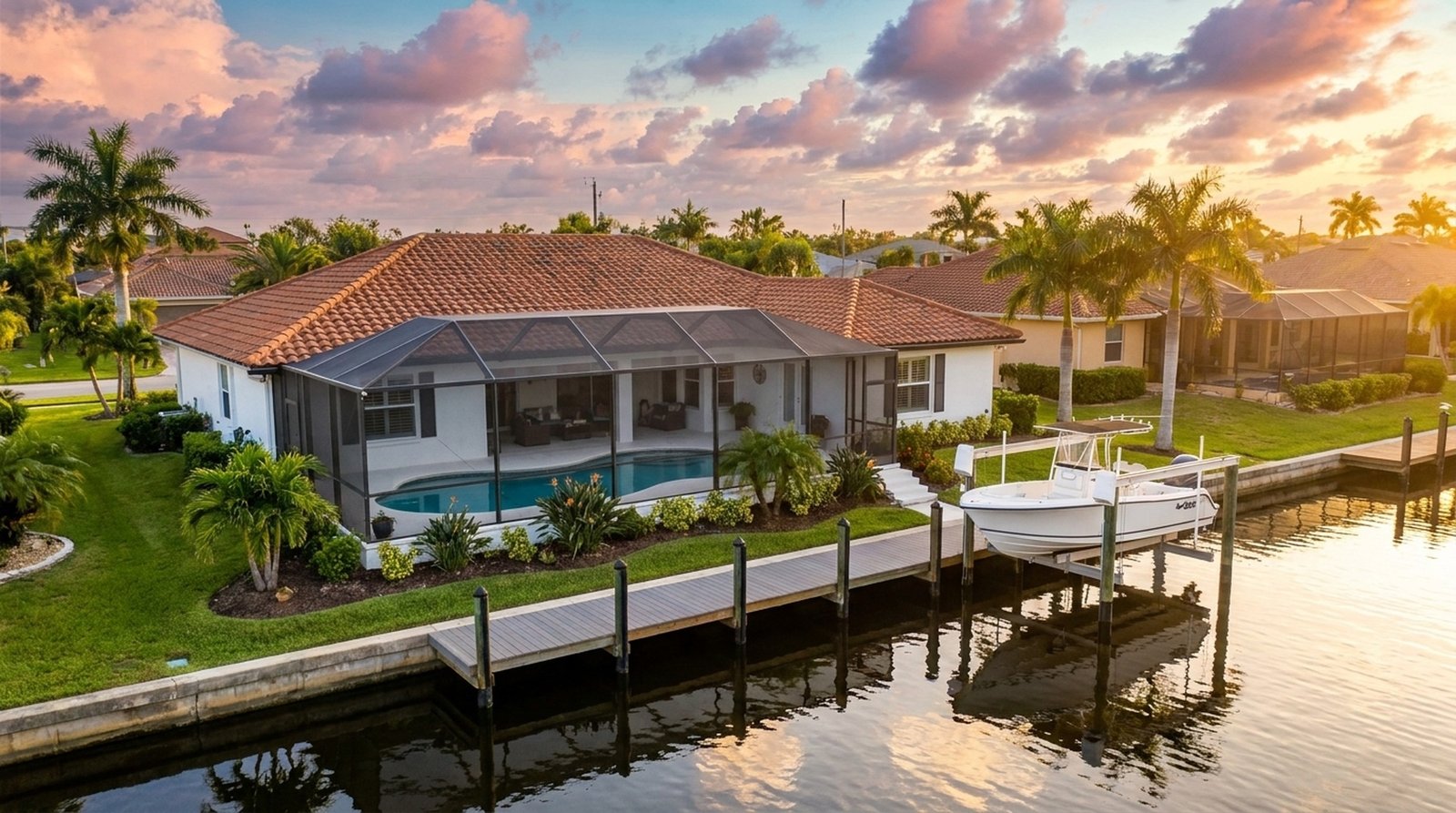
Buying a waterfront property in Southwest Florida is nothing like buying a standard home. There are flood zones, seawalls, canal access types, bridge clearances, and insurance considerations that most agents, let alone most buyers, don’t fully understand. If you’re a first-time waterfront buyer, this checklist is your roadmap. Print it, bring it to showings, and don’t skip a single item.
1. Flood Zone Verification
Every waterfront property in SWFL sits in a designated flood zone, and the zone directly impacts your insurance costs and building requirements.
- Zone X: Minimal flood risk. Lowest insurance premiums. About a quarter of Cape Coral canal-front lots map to Zone X, mostly in the NW Cape; it’s uncommon for waterfront in the SW and SE Cape.
- Zone AE: High-risk area with a Base Flood Elevation (BFE) established. Most Cape Coral waterfront falls here. Flood insurance is required with a mortgage.
- Zone VE: Coastal high-hazard area with wave action. Highest premiums, strictest building codes. Common on barrier islands and some direct gulf-front properties.
Ask for the property’s elevation certificate. This document shows the structure’s elevation relative to the BFE. Under FEMA’s current Risk Rating 2.0 system it’s optional, an elevation certificate doesn’t set your flood insurance rate, but it can identify discounts that lower your NFIP premium, and private flood carriers may still use it. Elevation still works in your favor: a home built above BFE generally costs less to insure, though rates are no longer keyed to a strict at-or-below-BFE cutoff.
2. Wind Mitigation Inspection
Florida’s wind insurance credits can save you thousands per year, but you need an inspection to document the features. Look for:
- Hip roof design (credits vs. gable roof)
- Impact-resistant windows and doors (or approved shutters)
- Reinforced garage door
- Roof-to-wall connection type (toe nail, clip, or wrap, wrap is best)
- Roof age and material
Always request a wind mitigation report before closing. If the home has strong wind mitigation features, your insurance savings can offset a significant portion of your mortgage payment.
3. Special Assessment Status
Cape Coral has a history of special assessments for utilities, road paving, and canal maintenance. Some properties still have outstanding balances. Find out:
- Is there an active special assessment balance?
- Can it be paid off at closing or assumed?
- Are any new assessments proposed for the area?
An unexpected $10,000+ assessment after closing is not how you want to start waterfront life.
4. Seawall Inspection
This is the single most important inspection for a waterfront property. Standard home inspectors do not evaluate seawalls. You need a marine contractor or seawall specialist.
What they’re checking:
- Structural integrity (cracks, leaning, bowing)
- Soil erosion behind the wall
- Condition of the cap and panels
- Drainage system functionality
- Remaining estimated lifespan
Typical costs: Seawall replacement runs $30,000 to $80,000+ depending on length and access. A seawall with 5 years of life left is very different from one with 25 years left, negotiate accordingly.
5. Dock and Boat Lift Evaluation
Inspect the dock structure, decking material, electrical service, and boat lift mechanism:
- Wood vs. composite decking (composite lasts longer but costs more)
- Lift capacity, does it match the boat you plan to own?
- Cable condition and last replacement date
- Permit history, were the dock and lift properly permitted?
Unpermitted dock structures can create liability and prevent you from getting proper insurance coverage.
6. Canal Access Type Confirmation
Don’t take the listing agent’s word for it. Verify independently:
- Gulf access: Confirm the canal actually connects to open water and through which exit point
- Sailboat water: Verify there are truly zero bridges between the dock and open water
- Freshwater: Confirm it’s not gulf access if that matters to you
Use our canal map tool to trace the route from any address to open water, it shows every canal segment and bridge along the way.
7. Bridge Clearance for Your Vessel
If the property is gulf access with bridges, measure your boat’s height from the waterline to the tallest point (T-top, antenna, radar, etc.) and verify clearance on every bridge along the route. Check clearance at mean high water, not low tide.
8. Insurance Cost Estimates
Get actual quotes, not estimates, for all three policies you’ll need:
- Flood insurance: $1,500 – $5,000+/year depending on zone and elevation
- Wind insurance: $2,000 – $8,000+/year depending on construction and mitigation
- Hazard insurance: $1,500 – $4,000+/year
Total insurance on a waterfront home in SWFL can easily run $5,000 to $15,000 per year. Factor this into your monthly budget before you fall in love with a property.
9. HOA vs. Non-HOA Considerations
Many waterfront communities in Cape Coral are non-HOA, which means freedom but also no shared maintenance. If there is an HOA:
- What does it cover? (common areas, dock maintenance, seawall?)
- Are there boat or RV restrictions?
- What’s the financial health of the association?
- Are there pending special assessments?
10. Questions Most First-Time Waterfront Buyers Miss
- “What’s the canal width at this property?” Wider canals are more desirable and valuable.
- “Is there southern exposure?” South-facing canal views mean your pool gets sun all day.
- “What’s the no-wake zone situation?” Some canals require no-wake speeds the entire way to open water, adding 30+ minutes to your trip.
- “Has this property ever flooded?” Ask for disclosure of any water intrusion events.
- “What are the neighbors’ boats?” A canal lined with large, well-maintained boats tells you the neighborhood is invested in the waterfront lifestyle.
This list might feel overwhelming, but that’s exactly why you need a team who lives and breathes waterfront real estate. Book a call with The Milner Team, we’ll walk you through every item on this checklist and make sure your first waterfront purchase is one you’ll celebrate for years.
Shop the live lists: waterfront · gulf access · direct gulf access.